Utilities, fuel prices impact more on households than food inflation – BFAP


State-owned Eskom’s 8.76% hike in electricity tariffs for the 2026/27 financial year, combined with higher fuel prices, are compromising the food security of South African households by eroding disposable income, says agricultural research organisation the Bureau for Food and Agricultural Policy (BFAP).
These increases are also expected to impact on food retail prices within the next two to three months.
The potential direct financial impact of the April electricity and fuel price increases on an average lower-income household in South Africa would be an extra R160 a month for electricity, and an extra R115 a month for taxi transport for two adults.
Food and non-alcoholic beverages inflation eased slightly to 3.6% year-on-year in March, down from 3.7% in February, despite consistently high year-on-year inflation on red meat, although the reprieve may be short-lived.
Month-on-month food and non-alcoholic beverages inflation was 0% compared with February's reading, but this is higher than the 0.3% month-on-month deflation in February.
However, headline consumer price inflation increased to 3.1% year-on-year in March, compared with 3% in February.
The biggest contributors to the March headline consumer price inflation reading were households and utilities costs at 39%, food and non-alcoholic beverages at 19% and insurance and financial services at 16%, with restaurants and accommodation services contributing 13% to the reading, and other sources contributing 13%.
In March, the cost of a basic healthy food basket amounted to R3 872 a month. This was 3.2-times more than the cost to obtain adequate energy for daily survival for the average household of two adults and two children, although the adequate energy basket does not have adequate dietary diversity, the BFAP says.
“The cost to obtain adequate energy could absorb 17% of the income of an average household consisting of one minimum wage and two child support grants.
“An average household earning two minimum wages that also receives child support grants could spend about 30% of income on a basic healthy food basket, in line with the typical income of lower-income average households.”
In terms of food coping strategies that South African households adopt when facing income pressure and/or high food prices, the most immediate response is switching to less expensive, often nutrient-poor, and less-preferred foods and brands.
Reduced meal sizes or fewer daily meals are also often adopted, the BFAP says.
Other strategies include intra-household buffering, such as adults reducing food intake in favour of children, buying food on credit and social borrowing, such as by seeking help from friends or relatives.
To absorb the income shock caused by the electricity and fuel price increases, a lower-income household could be forced to reduce dietary diversity by purchasing less nutrient-dense food and consuming more maize meal.
For example, to recover the R275 impact on income and buy enough maize meal to replace the calories that are not affordable, a household could eliminate a selection of items from their monthly food purchases, including 2 kg of onions, 2 kg of tomatoes, two heads of lettuce, 1.5 kg of apples, 1 kg of bananas and 2 kg of chicken pieces.
However, removing these products from their food basket for the month and replacing the energy intake with maize meal causes a significant loss in dietary diversity, including reduced intake of quality protein, fibre, vitamins C and B and minerals such as potassium, selenium and zinc.
This will result in so-called hidden hunger, where energy intake is maintained but essential micro-nutrients are reduced, the research organisation notes.
FOOD PRODUCTION
Meanwhile, although electricity prices remained relatively stable during this period, the implementation of the higher electricity tariff increase from April 1 will raise manufacturing costs going forward.
These electricity and fuel price shocks are pushing up processing, packaging and distribution costs through the value chain, contributing to retail food price inflation.
Currently, farm‑level prices of core staple commodities, such as maize, are softening, supported by South Africa’s status as a net exporter and large domestic surpluses.
However, in the medium to long term, persistently high input costs may place upward pressure on commodity prices when decisions to plant are affected, essentially resulting in a change in supply, the BFAP says.
If the Middle East conflict persists, sustained increases in fuel and fertiliser prices and potential input supply disruptions could reduce future planting and output, tightening supply and exerting stronger upward pressure on food prices.
This pressure may be further exacerbated by the expected intense El Niño event, which typically results in warmer and drier conditions in Southern Africa and may therefore affect yields of next year’s summer crop, notes the BFAP.
Article Enquiry
Email Article
Save Article
Feedback
To advertise email advertising@creamermedia.co.za or click here
Research Reports

Projects

Latest Multimedia


Latest News

Showroom
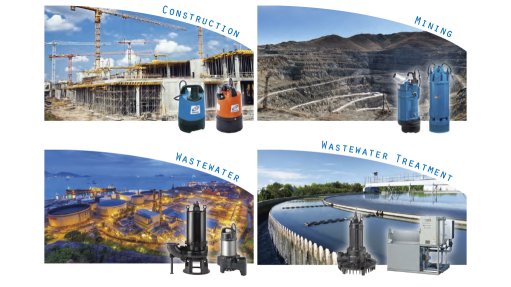
Tsurumi Pumps Africa is a specialist supplier of Japanese-engineered submersible pumping solutions, serving customers across the African continent.
VISIT SHOWROOM
Design, Construction and Maintenance of Site Erected, Welded Bulk Storage Tanks for the Petrochemical, LNG, Ammonia and Sustainable fuel Sectors.
VISIT SHOWROOM



Announcements
What's On
Subscribe to improve your user experience...
Option 1 (equivalent of R125 a month):
Receive a weekly copy of Creamer Media's Engineering News & Mining Weekly magazine
(print copy for those in South Africa and e-magazine for those outside of South Africa)
Receive daily email newsletters
Access to full search results
Access archive of magazine back copies
Access to Projects in Progress
Access to ONE Research Report of your choice in PDF format
Option 2 (equivalent of R375 a month):
All benefits from Option 1
PLUS
Access to Creamer Media's Research Channel Africa for ALL Research Reports, in PDF format, on various industrial and mining sectors
including Electricity; Water; Energy Transition; Hydrogen; Roads, Rail and Ports; Coal; Gold; Platinum; Battery Metals; etc.
Already a subscriber?
Forgotten your password?
Receive weekly copy of Creamer Media's Engineering News & Mining Weekly magazine (print copy for those in South Africa and e-magazine for those outside of South Africa)
➕
Recieve daily email newsletters
➕
Access to full search results
➕
Access archive of magazine back copies
➕
Access to Projects in Progress
➕
Access to ONE Research Report of your choice in PDF format
RESEARCH CHANNEL AFRICA
R4500 (equivalent of R375 a month)
SUBSCRIBEAll benefits from Option 1
➕
Access to Creamer Media's Research Channel Africa for ALL Research Reports on various industrial and mining sectors, in PDF format, including on:
Electricity
➕
Water
➕
Energy Transition
➕
Hydrogen
➕
Roads, Rail and Ports
➕
Coal
➕
Gold
➕
Platinum
➕
Battery Metals
➕
etc.
Receive all benefits from Option 1 or Option 2 delivered to numerous people at your company
➕
Multiple User names and Passwords for simultaneous log-ins
➕
Intranet integration access to all in your organisation